Let’s be honest – most dentists don’t spend a lot of time thinking about their dental laboratory. You take the impression, send it off, and expect a well-fitting crown back in a few days. But here’s the thing: the dental laboratory you work with quietly shapes every clinical outcome you deliver. A great dental laboratory can make your restorations shine. A poor one can undo hours of your best chairside work.
This guide is for dentists who want to really understand what happens inside a dental laboratory – how it works, what it offers, and how to find a dental laboratory that feels like a true partner, not just a vendor. No jargon. No fluff. Just practical information you can use from tomorrow morning.
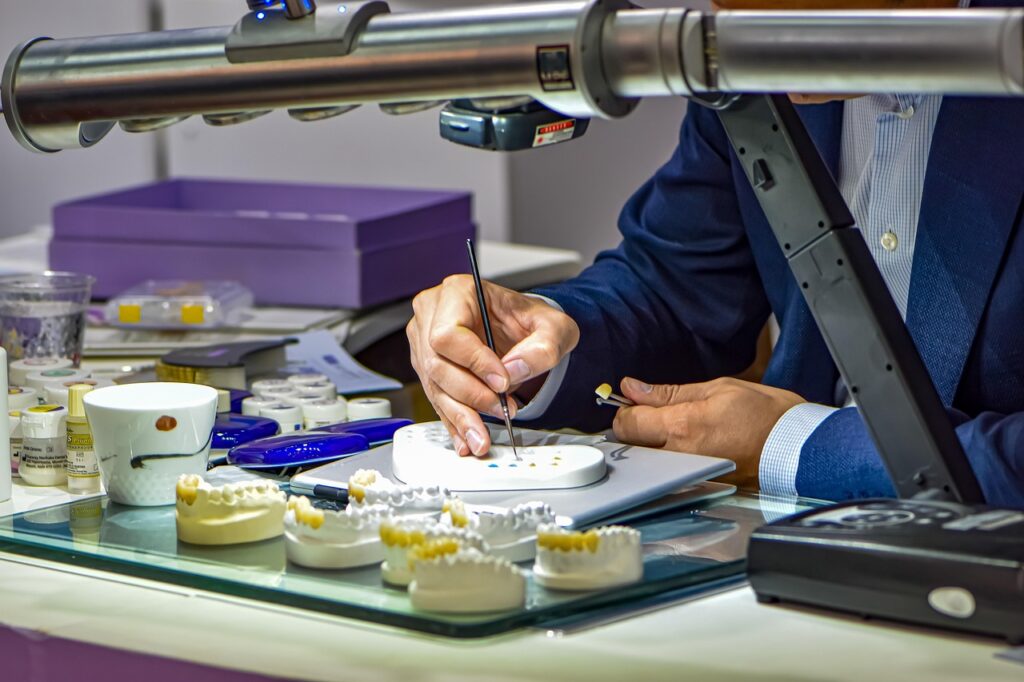
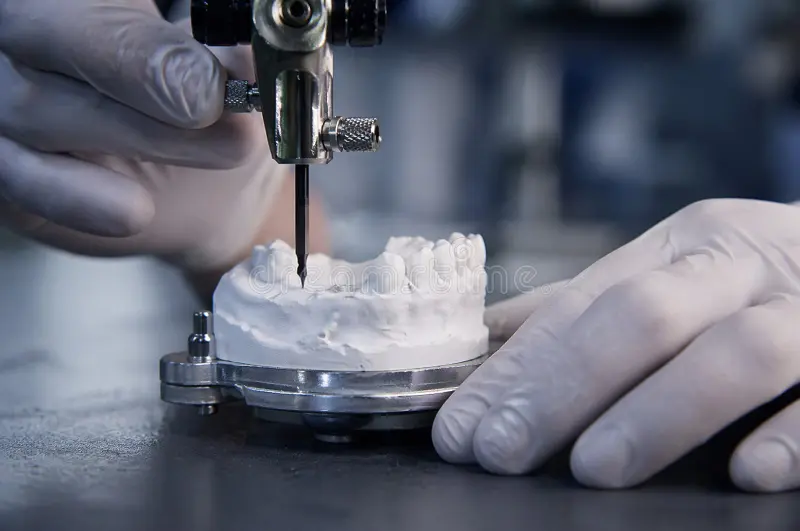
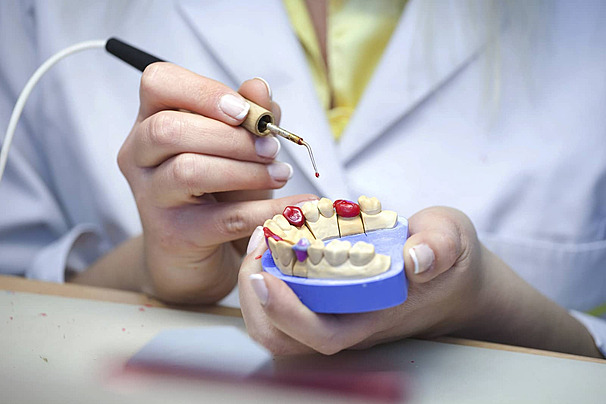
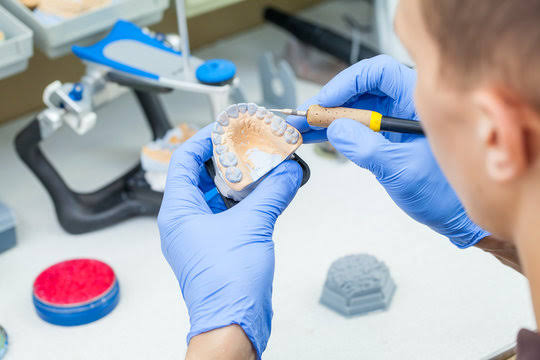
Table of Contents
1. What Is a Dental Laboratory?
At its simplest, a dental laboratory is a place where skilled technicians handcraft or digitally fabricate the dental restorations that you fit into your patients’ mouths – crowns, bridges, dentures, veneers, implant components, and more.
Think of a dental laboratory as an extension of your clinic. You do the diagnosis and the prep. The dental laboratory does the making. A good dental laboratory technician is part engineer, part sculptor – working from your prescription to create something that fits a real human mouth, matches the surrounding teeth, and lasts for years.
According to the FDI World Dental Federation, there are over 160,000 dental laboratories operating around the world. Each one serves a different pool of dentists, but the goal is the same: help clinicians deliver better outcomes for their patients.
The best dental laboratory isn’t just a workshop – it’s a conversation partner. When you can call your dental laboratory to discuss a tricky case or flag a concern, everything runs smoother.
2. Why Your Dental Laboratory Matters More Than You Think?
Here’s something dental schools don’t always teach clearly: your dental laboratory has an enormous influence on the quality of your work – even when you do everything right clinically. A misfitting crown isn’t always a prep problem. Sometimes it’s a dental laboratory problem.
So what should a good dental laboratory actually bring to the table?
- Precision you can trust: Every crown or bridge made at a dental laboratory needs to fit with micron-level accuracy. There’s no room for ‘close enough’ in a patient’s mouth.
- Material know-how: Materials in dentistry are evolving fast. A good dental laboratory team keeps up with what’s new – so you don’t have to research every new zirconia or ceramic brand yourself.
- Support on complex cases: Full-arch rehabs, implant cases, complex aesthetics – these are situations where the dental laboratory’s experience really shows. A knowledgeable dental laboratory can guide you through the process.
- Reliable turnarounds: Gaps in your schedule cost your money and frustrate patients. A dental laboratory that delivers on time, every time, is genuinely valuable.
Research from PubMed shows a clear link between how well dentists and dental laboratories communicate and how successful prosthetic outcomes turn out. In short – the relationship matters.
3. 7 Core Services a Good Dental Laboratory Should Offer
Not every dental laboratory is built the same way. Some specialise in a narrow range. Others – like a full-service dental laboratory – cover everything under one roof. Here are the seven services worth looking for:
- Crowns & Bridges – The everyday workhorse of any dental laboratory. Look for options in zirconia, PFM, full ceramic, and metal, depending on what your cases demand.
- Implant Prosthetics – Not every dental laboratory handle implant cases well. Make sure your dental laboratory has specific experience with custom implant crowns, abutments, and implant-supported bridges.
- Veneers & Laminates – Aesthetic work is where the dental laboratory’s artistry really shows. Colour matching, surface texture, translucency – all of it matters enormously in veneer cases.
- Inlays & On lays – These indirect restorations offer excellent longevity when made well. A skilled dental laboratory produces inlays and on lays that fit like they belong there.
- Full & Partial Dentures – Whether it’s a complete denture for an elderly patient or a cast partial, a full-service dental laboratory should handle both comfortably.
- Orthodontic Appliances – Retainers, functional appliances, space maintainers – a dental laboratory with a broad scope can save you the hassle of sending cases to multiple labs.
- Digital Prosthetics (CAD/CAM & DMLS) – The modern dental laboratory uses digital design and milling for faster, more consistent results. If your dental laboratory doesn’t offer this, it’s worth asking why.
At Cornerstone Dental Laboratory, all seven of these services are available. That means you work with one trusted dental laboratory, not three different ones for different case types.
4. How a Dental Laboratory Actually Works - Step by Step
When you send a case to your dental laboratory, what actually happens on the other end? Here’s a plain-English walkthrough of the dental laboratory workflow from start to finish.
Step 1 - Your Prescription Arrives
Everything starts with what you send. The dental laboratory receives either a physical impression or a digital intraoral scan, along with your prescription. This prescription is basically an instruction sheet for the dental laboratory – shade, material, occlusal contacts, any specific requests. The clearer it is, the better the result.
Quick tip: A surprisingly large percentage of remakes happen not because the dental laboratory made a mistake, but because the prescription was unclear. A few extra seconds writing a detailed prescription saves a week of back-and-forth.
Step 2 - Building the Model or Digital Design
If a physical impression was sent, the dental laboratory pours a stone model to work from. If a digital scan was sent, the technician opens it in CAD software and begins designing the restoration on-screen. Either way, this is where the dental laboratory starts turning your clinical work into something tangible.
Step 3 – Fabrication
Now the real making begins. Depending on the material and case type, the dental laboratory will mill the restoration from a zirconia block, fire ceramics in a furnace, cast a metal framework, or 3D-print a surgical guide. Each route requires specific skill and equipment — which is why not all dental laboratories are equal.
Step 4 - Finishing & Quality Checks
Before anything leaves a reputable dental laboratory, it goes through a thorough check. Marginal fit, shade accuracy, occlusal contacts, surface finish – each restoration is inspected against your prescription. A good dental laboratory won’t dispatch work it isn’t proud of.
Step 5 - Delivery to Your Clinic
The finished restoration is packaged carefully and sent your way, usually with notes on seating and any relevant case details. At a well-run dental laboratory like CornerStone in Bangalore, turnaround on standard cases is typically 3 to 7 working days.
5. How to Pick the Right Dental Laboratory for Your Practice
This is the question most dentists eventually ask – and unfortunately, a lot of dentists learn the hard way, after a string of remakes or a frustrated patient. Picking a dental laboratory isn’t just about price or location. Here’s what actually matters:
- Do they meet quality standards? Your dental laboratory should comply with BIS and ISO standards for dental prosthetics. These aren’t just formalities – they reflect a dental laboratory that takes quality seriously.
- Are they up to date with technology? A dental laboratory still relying entirely on older analogue workflows is worth being cautious about. Digital capability in a dental laboratory is increasingly non-negotiable.
- Are they open about their materials? Ask what brands and grades of zirconia, ceramics, and metals your dental laboratory uses. A good dental laboratory is transparent about this without hesitation.
- Can you actually talk to someone? This sounds basic, but it matters. The best dental laboratory partnerships feel collaborative. If your dental laboratory is hard to reach or dismissive of questions, that’s a sign.
- Do they deliver consistently? One fast turnaround means nothing if it’s followed by delays. Look for a dental laboratory with a consistent track record, not just a great first impression.
- Have they handled cases like yours? If you do a lot of implant work or full-arch cases, make sure your dental laboratory has real experience there, not just a checkbox on their website.
The American Dental Association has useful guidance on evaluating dental laboratory quality that is worth a read, even for dentists in India.
For clinics across Bangalore and the rest of India, Cornerstone Dental Laboratory offers the full range of services, reliable turnaround, transparent materials, and a team you can actually talk to – making it a dental laboratory that dentists come back to.
6. Where Dental Laboratories in India Are Headed
The dental laboratory industry in India is changing faster than most dentists realise. Five years ago, a digital-first dental laboratory in Bangalore was a novelty. Today, it’s quickly becoming the baseline expectation.
A few trends worth keeping an eye on:
- AI is entering the dental laboratory: Artificial intelligence tools are now helping dental laboratory technicians design restorations faster and with greater consistency. This isn’t science fiction – it’s already happening in leading dental laboratory facilities.
- Digital dental laboratories vs. in-clinic milling: Some clinics are investing in chairside milling, but the reality is that centralised dental laboratories handle complex and high-volume work more efficiently and economically for most practices.
- Geography no longer limits you: Digital workflows mean a dentist in Hyderabad or Chennai can easily work with a high-quality dental laboratory in Bangalore. The digital dental laboratory is breaking down distance barriers.
- Better materials are arriving constantly: Ultra-translucent zirconia, PEEK, and next-generation hybrid ceramics are giving dental laboratory technicians more options to create restorations that truly look and feel natural.
Cornerstone Dental Laboratory’s vision is to empower over 2,500 dentists across India by 2035. That kind of ambition reflects a dental laboratory that sees itself as a genuine partner in the growth of Indian dentistry – not just a production facility.
To Wrap Up
Your dental laboratory is one of those relationships in your practice that you can easily take for granted – until something goes wrong. A crown comes back that doesn’t fit. A shade is off. A deadline is missed. That’s when you realise how much the dental laboratory behind your work actually matters.
But when you find a dental laboratory that genuinely cares about quality, communicates well, and delivers consistently – it changes the way you practice. Fewer remakes. Happier patients. Less stress. And honestly, a lot more confidence when you cement that final restoration.
If you’re ready to work with a dental laboratory that takes your cases as seriously as you do, get in touch with Cornerstone Dental Laboratory and see the difference for yourself.
What is a dental laboratory?
A facility where skilled technicians fabricate dental restorations – crowns, bridges, veneers, dentures, and implants – based on your clinical prescription.
How does a dental lab affect my patients?
Directly. A poor-quality lab can undo your best chairside work. Precision, materials, and communication from your lab impact every restoration you deliver.
What services should a dental lab offer?
Crowns & bridges, implant prosthetics, veneers, inlays & onlays, dentures, orthodontic appliances, and digital prosthetics (CAD/CAM & DMLS) – all under one roof.
How does a dental lab process a case?
Receive prescription – build model or CAD design – fabricate – quality check – deliver to your clinic. Simple, but every step demands precision.
How long does delivery take?
Standard cases: 3–7 working days at a well-run lab like CornerStone Dental Laboratory, Bangalore.
What technologies should a modern lab have?
CAD/CAM milling, DMLS 3D printing, Digital Smile Design, intraoral scan integration, and digital shade matching (spectrophotometry).
Why do remakes happen?
Most often due to unclear prescriptions – not lab errors. A detailed prescription saves time, cost, and back-and-forth.
How do I pick the right dental lab?
Check for ISO/BIS certification, digital capability, material transparency, consistent turnarounds, and open communication.